1页(16条)
solving equation within a range and integral - 消息

Good day!
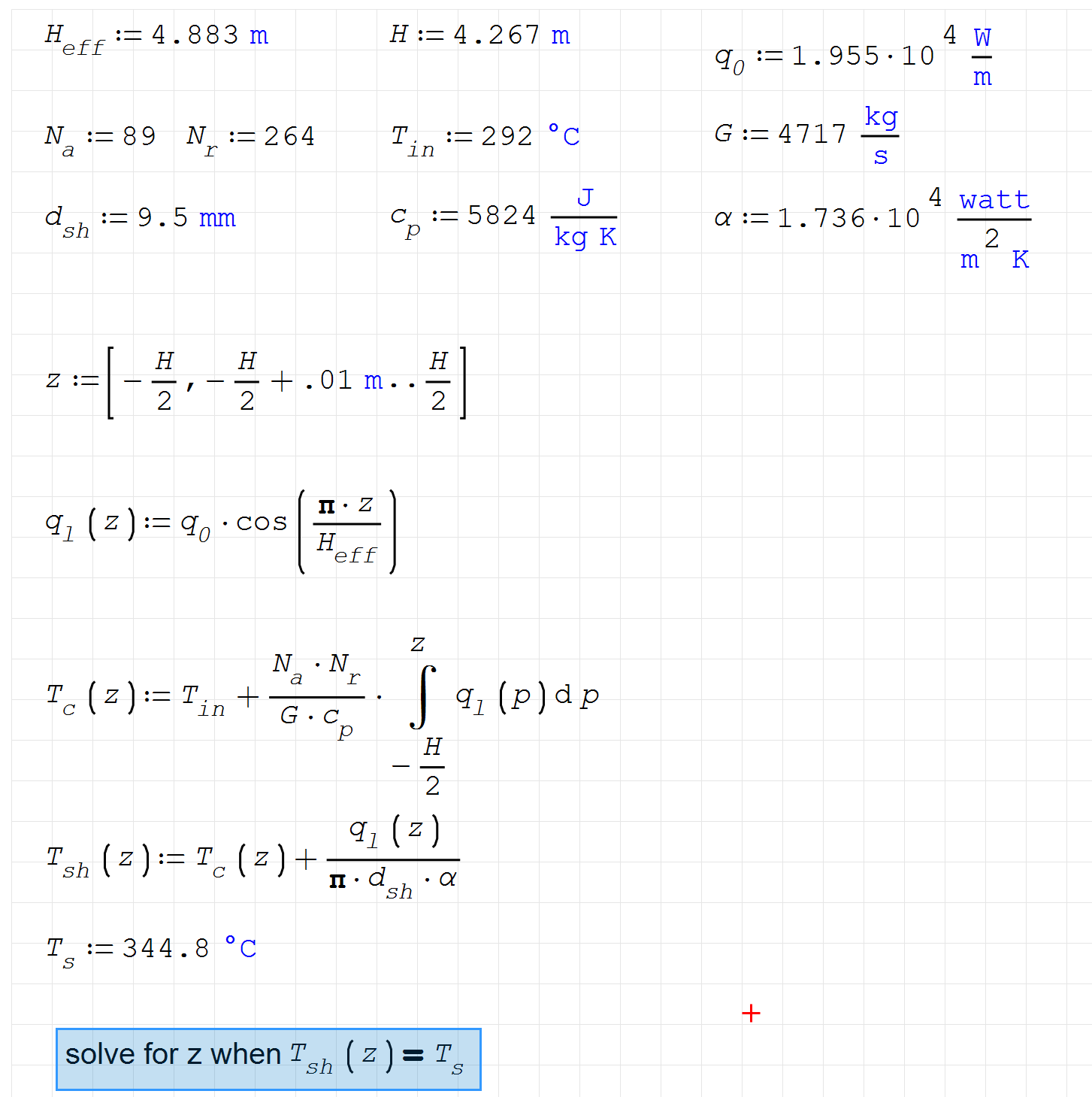
I was a Mathcad Prime user but I am currently trying to learn SMath and importing my calculations in it. It was easier in Mathcad but somehow I'm stuck when doing this part regarding solving equation that involves units, a range, and integral, and graphing the plots
I would really appreciate if someone could help me with my problem
solver.sm (10.71 KiB)已下载 1317 次。
I was a Mathcad Prime user but I am currently trying to learn SMath and importing my calculations in it. It was easier in Mathcad but somehow I'm stuck when doing this part regarding solving equation that involves units, a range, and integral, and graphing the plots
I would really appreciate if someone could help me with my problem
solver.sm (10.71 KiB)已下载 1317 次。

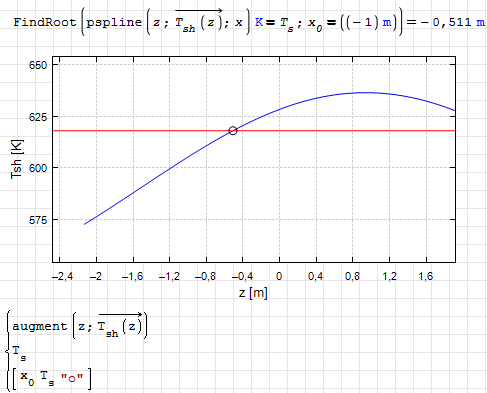
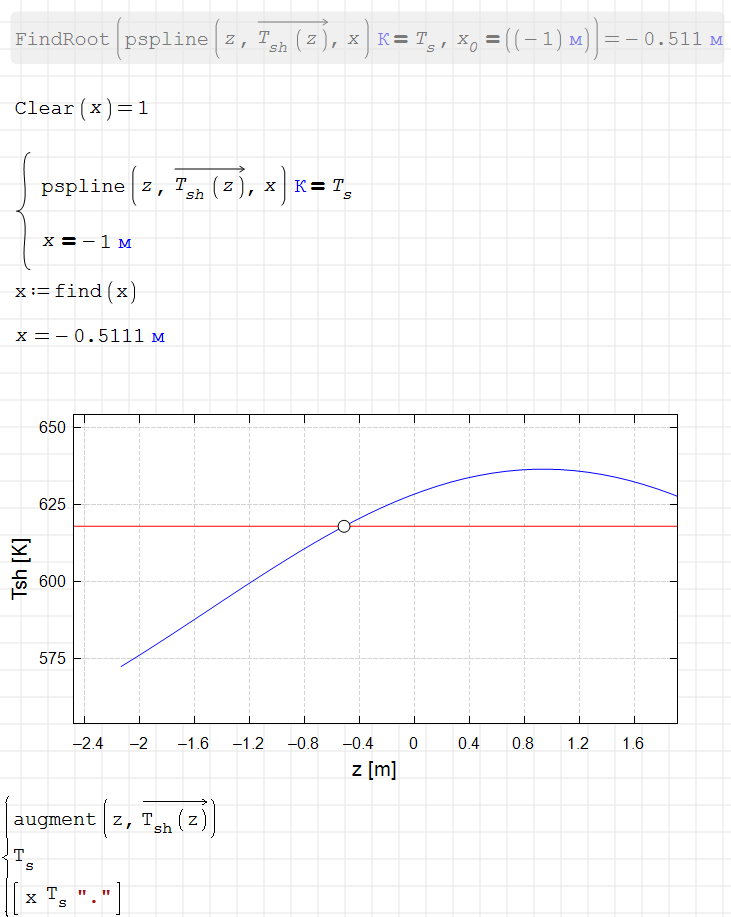
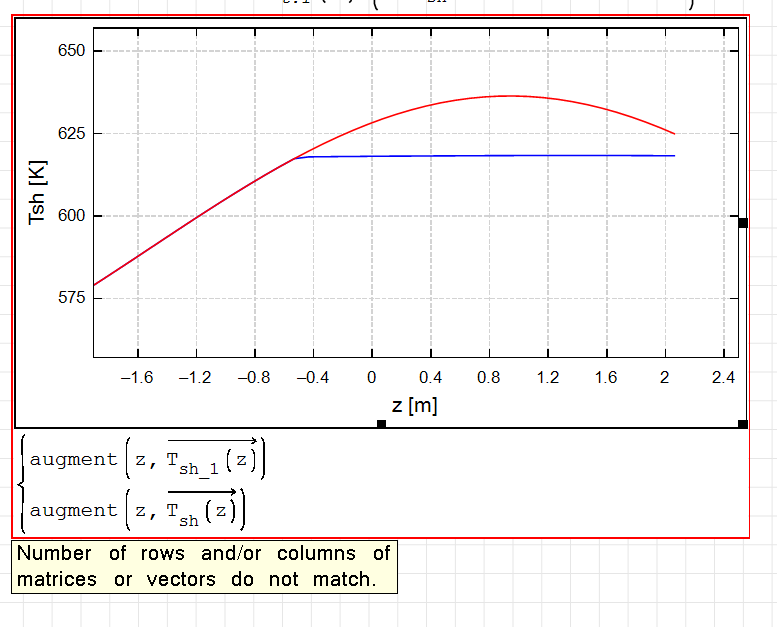
Plot a graph and you can see that Tsh never gets anywhere near Ts:
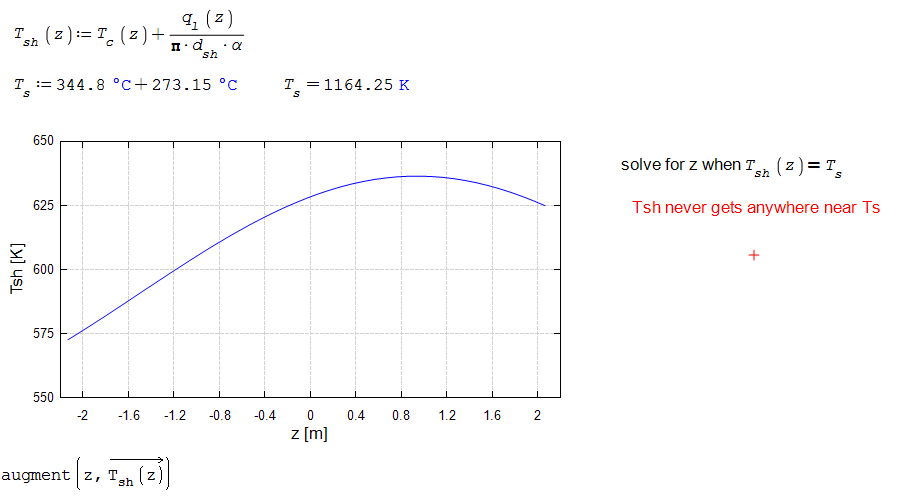
I'm sorry but your conversion of T_s from Celsius to Kelvin is wrong. T_s = 617.95 K
WrotePlot a graph and you can see that Tsh never gets anywhere near Ts:
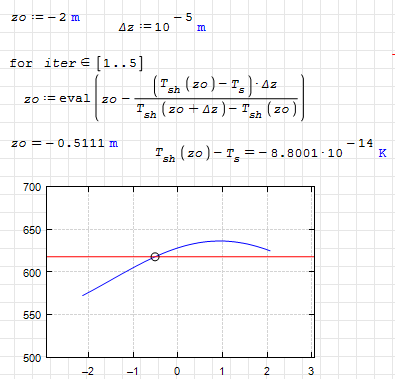
Hi. You can try using some ad-hoc Newton-Raphson method.
solver_mule.sm (17.92 KiB)已下载 1290 次。
Best regards.
Alvaro.
solver_mule.sm (17.92 KiB)已下载 1290 次。
Best regards.
Alvaro.
@mule You are right! It's what SMath returned, and I didn't do a sanity check! Of course, SMath understands units - I'm obviously half asleep today!!
I simply wrote a simple Newton-Raphson solution in the attached.
solver_b.sm (18.29 KiB)已下载 1363 次。
I simply wrote a simple Newton-Raphson solution in the attached.
solver_b.sm (18.29 KiB)已下载 1363 次。
已编辑 2025/9/9 16:18:54
Technische Mechanik mit SMath Studio: https://link.springer.com/book/10.1007/978-3-658-50592-9
3位用户喜欢此帖子

Russia ☭ forever, Viacheslav N. Mezentsev
3位用户喜欢此帖子
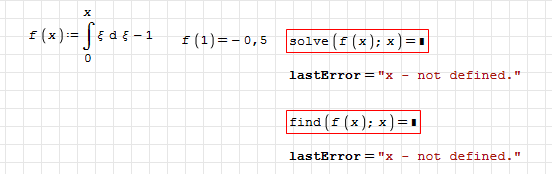
Is anyone able to explain, why the function can be evaluated in the context of pspline but not in the context of a solver? Looks like a really big problem under the hood, otherwise could have been fixed long ago.
Edit: Part of the problem is throwing pointless error messages. The unknown variable MUST be undefined in solver calls.
Edit: Part of the problem is throwing pointless error messages. The unknown variable MUST be undefined in solver calls.
已编辑 2025/9/10 07:41:00
Technische Mechanik mit SMath Studio: https://link.springer.com/book/10.1007/978-3-658-50592-9
I can make an assumption that the integral with a parameter in the upper limit works only for numerical calculations, and is not supported for symbolic transformations.
Russia ☭ forever, Viacheslav N. Mezentsev
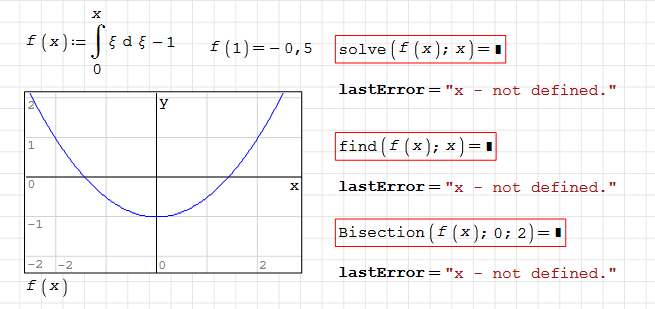
As far as I understand, all solvers are numeric procedures, except roots(), where I suspect that it tries to determine the gradient symbolically. Even the gradient-free Bisection() fails. Here I can't understand why any symbolic evaluation should be required.
Technische Mechanik mit SMath Studio: https://link.springer.com/book/10.1007/978-3-658-50592-9
In fact, when implementing a function in a plugin, you have the opportunity to do preliminary transformations before the actual numerical calculations begin.
Very rarely is the implementation of a function purely numerical. Moreover, for any functions that accept expressions, the implementation always contains symbolic transformations.
Look at how the pspline function is implemented
It is a completely numerical function, since it works with scalars. It does not perform symbolic transformations and when it is necessary to calculate an integral, it becomes defined with specific limits in the form of numbers. The equation solver sees an unfamiliar function and simply assumes that it works.
Very rarely is the implementation of a function purely numerical. Moreover, for any functions that accept expressions, the implementation always contains symbolic transformations.
Look at how the pspline function is implemented
public bool TryEvaluateExpression( Entry value, Store context, ref Entry result ) => false;It is a completely numerical function, since it works with scalars. It does not perform symbolic transformations and when it is necessary to calculate an integral, it becomes defined with specific limits in the form of numbers. The equation solver sees an unfamiliar function and simply assumes that it works.
已编辑 2025/9/10 11:06:08
Russia ☭ forever, Viacheslav N. Mezentsev
1位用户喜欢此帖子
Martin Kraska 2025/9/10 20:56:36
WOW! it's exactly as what I did with Mathcad Prime. Thank you very much for this tip. I'm definitely using SMath from now on
WroteFunny workaround. Other solvers are now available.
solver_b_Kr_uni.sm (23.2 KiB)已下载 1312 次。
WroteAs far as I understand, all solvers are numeric procedures, except roots(), where I suspect that it tries to determine the gradient symbolically. Even the gradient-free Bisection() fails ...
Hi Martin. The "symbolic" part in all the solvers in the NonLinearSolvers plugin is Unknowns. You can see from Bisection's syntax that it has to use it to determine which is the independent variable. In other words, if Unknowns fails, the solver fails too.
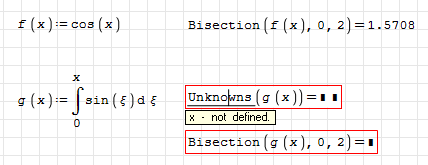
Best regards.
Alvaro.
1位用户喜欢此帖子
Martin Kraska 2025/9/10 20:56:28
Alvaro, I see that Unknowns() just is not smart enough. Yet, this does not apply to the solvers which do not need to guess the names of the variables,
Viatcheslav, you pointing to the scalar nature of the argument (the third one) of pspline() brought an argument to my mind that I once had with Andrey. I complained that SMath doesn't perform some symbolic simplifications (see screenshot below) and the essence of that discussion was that Maxima assumes unknown variables to be scalars, while SMath doesn't do that. Andrey insisted in not making the scalarity assumption by default.
Yet, there is a way in SMath to declare a variable as scalar: you have to tag it as unit.
And indeed, this trick does the job for solve() and roots() and find(). Yet I consider this rather being a hack than a solution.
First, you frequently have naming conflicts with pre-defined units.
Second, I can't explain to the reader, why a solver which anyways can't handle anything except scalars (like solve()) doesn't make that assumption by default.
find() seems to have the best unit handling. The unknowns are allowed to have units and be tagged as units. Yet, having the scalarity assumption in it by default, would be a dream.
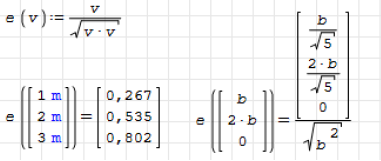
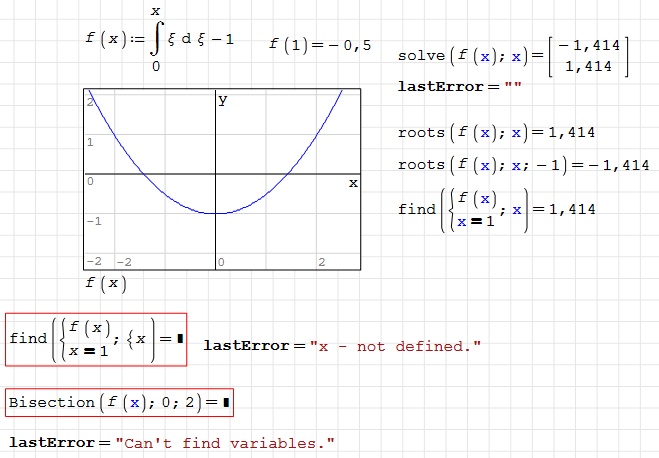
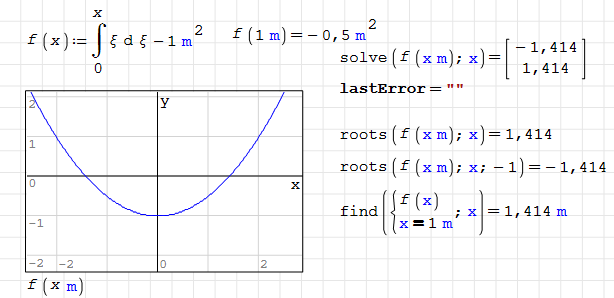
Viatcheslav, you pointing to the scalar nature of the argument (the third one) of pspline() brought an argument to my mind that I once had with Andrey. I complained that SMath doesn't perform some symbolic simplifications (see screenshot below) and the essence of that discussion was that Maxima assumes unknown variables to be scalars, while SMath doesn't do that. Andrey insisted in not making the scalarity assumption by default.
Yet, there is a way in SMath to declare a variable as scalar: you have to tag it as unit.
And indeed, this trick does the job for solve() and roots() and find(). Yet I consider this rather being a hack than a solution.
First, you frequently have naming conflicts with pre-defined units.
Second, I can't explain to the reader, why a solver which anyways can't handle anything except scalars (like solve()) doesn't make that assumption by default.
find() seems to have the best unit handling. The unknowns are allowed to have units and be tagged as units. Yet, having the scalarity assumption in it by default, would be a dream.
Technische Mechanik mit SMath Studio: https://link.springer.com/book/10.1007/978-3-658-50592-9
1位用户喜欢此帖子
Вячеслав Мезенцев 2025/9/10 21:11:08
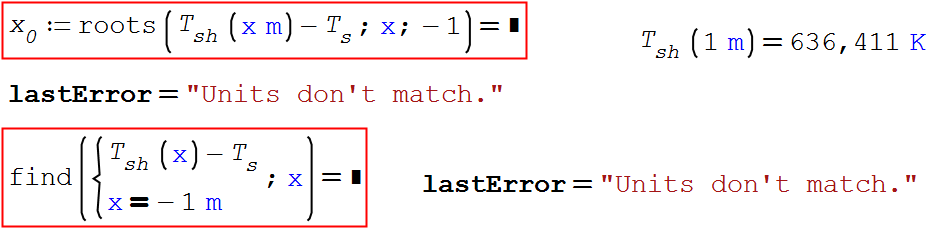
Still the original problem is not solved:
Technische Mechanik mit SMath Studio: https://link.springer.com/book/10.1007/978-3-658-50592-9
1页(16条)
- 有新帖
- 无新帖